In today’s competitive landscape, we find ourselves in an environment where demonstrating business value is not just a luxury but a necessity. As organizations strive to innovate and adapt, we must recognize that stakeholders are increasingly focused on the tangible benefits that change initiatives bring. By effectively showcasing the value of our efforts, we can secure buy-in from leadership and ensure that our projects receive the necessary resources and support.
This understanding is crucial as it lays the foundation for our strategic initiatives and helps us articulate the return on investment (ROI) that our stakeholders expect.
Moreover, demonstrating business value fosters a culture of accountability and transparency within our organization.
When we can clearly communicate the impact of our initiatives, we not only build trust with our stakeholders but also empower our teams to take ownership of their contributions.
This sense of responsibility encourages a proactive approach to problem-solving and innovation, ultimately leading to enhanced performance across the board. By prioritizing the demonstration of business value, we position ourselves as strategic partners within our organizations, capable of driving meaningful change.
Key Takeaways
- Demonstrating business value is crucial for the success and sustainability of any organization.
- Identifying key stakeholders and understanding their expectations is essential for aligning change management initiatives with business objectives.
- Establishing clear metrics and KPIs is necessary for measuring the success of change management initiatives in delivering business value.
- Communicating the value of change management to leadership is important for gaining their support and buy-in.
- Leveraging data and analytics can help in demonstrating the tangible business value of change management initiatives.
Identifying Key Stakeholders and Their Expectations
To effectively demonstrate business value, we must first identify the key stakeholders involved in our initiatives. These individuals can range from executive leadership to frontline employees, each with their own unique perspectives and expectations. By mapping out who these stakeholders are, we can tailor our communication strategies to address their specific concerns and objectives.
This targeted approach not only enhances our credibility but also ensures that we are aligned with the broader goals of the organization. Understanding stakeholder expectations is equally important. We need to engage in open dialogues to uncover what success looks like for each group.
For instance, while executives may prioritize financial metrics and strategic alignment, operational teams might focus on efficiency and user experience. By actively listening to these diverse viewpoints, we can create a comprehensive picture of what business value means across the organization. This insight allows us to craft initiatives that resonate with all stakeholders, ultimately leading to greater support and engagement.
Aligning Change Management Initiatives with Business Objectives
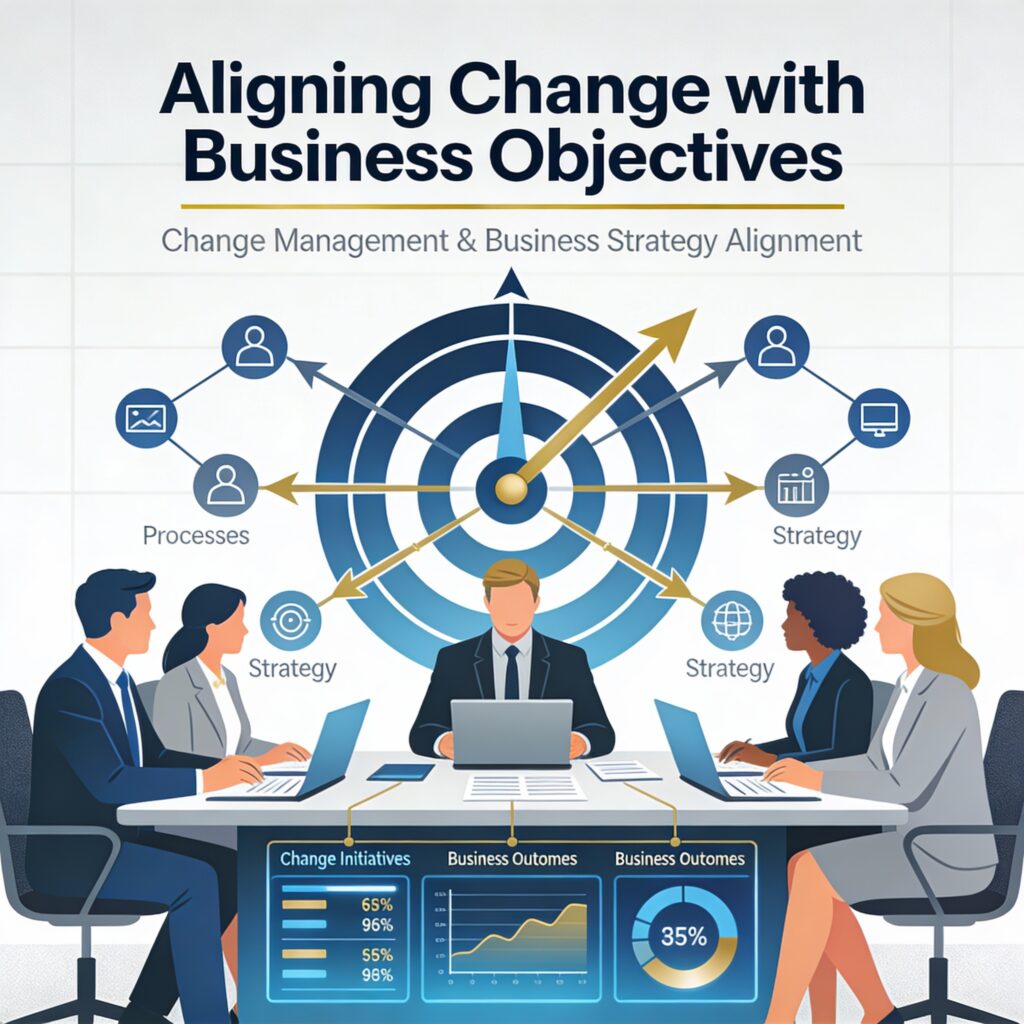
Aligning our change management initiatives with overarching business objectives is essential for demonstrating value. We must ensure that every project we undertake directly contributes to the strategic goals of the organization. This alignment not only clarifies our purpose but also helps us prioritize initiatives that will yield the greatest impact.
By connecting our efforts to the broader vision, we can effectively communicate how our work supports the organization’s mission and drives success. To achieve this alignment, we should engage in regular discussions with leadership and other key stakeholders. By understanding their priorities and challenges, we can tailor our change management strategies to address these needs directly.
This collaborative approach fosters a sense of shared ownership and commitment, as stakeholders see their input reflected in our initiatives. Ultimately, when we align our change management efforts with business objectives, we create a powerful narrative that underscores the importance of our work in driving organizational success.
Establishing Clear Metrics and KPIs for Measuring Business Value
Establishing clear metrics and key performance indicators (KPIs) is critical for measuring the business value of our initiatives. Without quantifiable measures, it becomes challenging to demonstrate the impact of our efforts effectively. We must identify relevant metrics that align with both stakeholder expectations and organizational objectives.
These could include financial metrics such as cost savings or revenue growth, as well as operational metrics like efficiency improvements or employee engagement scores.
Once we have defined these metrics, it is essential to communicate them clearly to all stakeholders involved. By setting expectations around what success looks like, we create a shared understanding of how progress will be measured.
Additionally, regular reporting on these metrics allows us to track our performance over time and make data-driven decisions. This transparency not only builds trust with stakeholders but also reinforces our commitment to delivering tangible business value.
Communicating the Value of Change Management to Leadership
Effectively communicating the value of change management to leadership is paramount for securing ongoing support and resources. We must craft compelling narratives that highlight how our initiatives contribute to organizational success. This involves not only presenting data and metrics but also sharing stories that illustrate the human impact of our work.
By framing change management as a strategic enabler rather than a mere operational necessity, we can elevate its importance in the eyes of leadership. In our communications, we should focus on outcomes rather than processes. Leaders are often more interested in how change management initiatives drive results than in the specific methodologies employed.
By emphasizing the positive outcomes—such as increased productivity, enhanced customer satisfaction, or improved employee morale—we can effectively convey the value of our efforts. Additionally, engaging leaders in discussions about their own experiences with change can foster a deeper understanding of its significance and encourage their active support.
Leveraging Data and Analytics to Demonstrate Business Value

In an era driven by data, leveraging analytics is crucial for demonstrating business value effectively. We have access to a wealth of information that can provide insights into the impact of our initiatives. By utilizing data analytics tools, we can track performance metrics in real-time and identify trends that inform our decision-making processes.
This data-driven approach not only enhances our credibility but also allows us to make informed adjustments to our strategies as needed. Furthermore, visualizing data through dashboards and reports can significantly enhance our ability to communicate value to stakeholders. By presenting complex information in an easily digestible format, we can highlight key achievements and areas for improvement at a glance.
This clarity enables stakeholders to grasp the significance of our initiatives quickly and fosters a culture of data-driven decision-making throughout the organization.
Showcasing Success Stories and Case Studies
Showcasing success stories and case studies is an effective way to demonstrate business value in a relatable manner. By highlighting specific examples of how our change management initiatives have led to positive outcomes, we can create compelling narratives that resonate with stakeholders. These stories serve as powerful testimonials to the effectiveness of our strategies and provide concrete evidence of the value we deliver.
When presenting success stories, it is essential to focus on both quantitative results and qualitative experiences. For instance, we might share a case study detailing how a particular initiative led to a significant increase in productivity while also highlighting employee testimonials about improved morale and engagement. By combining hard data with personal stories, we create a more holistic view of the impact of our work, making it easier for stakeholders to connect with and support our initiatives.
Engaging with Employees and Teams to Showcase Business Value
Engaging with employees and teams is vital for showcasing business value from within the organization. We must foster an environment where team members feel empowered to share their experiences and insights related to change initiatives. By actively involving employees in discussions about business value, we can tap into their unique perspectives and ideas, which can enhance our strategies and outcomes.
Moreover, recognizing and celebrating employee contributions reinforces the importance of demonstrating business value at all levels of the organization. When team members see their efforts acknowledged and valued, they are more likely to remain engaged and committed to driving positive change. This collective engagement not only strengthens our initiatives but also cultivates a culture where everyone feels responsible for contributing to organizational success.
Seeking Feedback and Adjusting Strategies to Enhance Business Value
Seeking feedback from stakeholders is essential for continuously enhancing business value through our initiatives. By actively soliciting input from employees, leadership, and other key stakeholders, we can gain valuable insights into what is working well and what areas may need improvement. This feedback loop allows us to make informed adjustments to our strategies, ensuring that we remain aligned with stakeholder expectations and organizational objectives.
Additionally, fostering a culture of open communication encourages stakeholders to share their thoughts candidly. We should create formal mechanisms for gathering feedback—such as surveys or focus groups—as well as informal channels for ongoing dialogue. By demonstrating that we value stakeholder input and are willing to adapt based on their feedback, we reinforce trust and collaboration within the organization.
Building a Culture of Continuous Improvement and Value Demonstration
Building a culture of continuous improvement is essential for sustaining long-term business value within our organization. We must encourage an environment where innovation is celebrated, and employees feel empowered to propose new ideas or improvements to existing processes. By fostering this mindset, we create a dynamic atmosphere where everyone is focused on driving positive change.
Moreover, regularly revisiting our strategies and metrics ensures that we remain agile in responding to evolving stakeholder needs and market conditions. We should establish routines for evaluating performance against established KPIs and identifying opportunities for enhancement. This commitment to continuous improvement not only demonstrates our dedication to delivering business value but also positions us as forward-thinking leaders within the organization.
Celebrating and Recognizing Achievements in Demonstrating Business Value
Finally, celebrating and recognizing achievements in demonstrating business value is crucial for reinforcing positive behaviors within our organization. When we acknowledge individual or team contributions that have led to successful outcomes, we create a sense of pride and motivation among employees. Celebrations can take many forms—ranging from formal awards ceremonies to informal shout-outs during team meetings—each serving as an opportunity to highlight the importance of demonstrating value.
By consistently recognizing achievements related to business value, we cultivate an environment where employees feel appreciated for their efforts. This recognition not only boosts morale but also encourages others to strive for excellence in their own contributions. Ultimately, by celebrating successes together, we strengthen our collective commitment to delivering meaningful business value across the organization.
If you’re interested in learning more about project management in the context of change management, check out the article “The Role of Project Management in Change Management.” This article delves into the importance of effective project management practices in driving successful change initiatives within organizations. It provides valuable insights and strategies for change managers looking to enhance their project management skills to better demonstrate business value.
FAQs
What is the role of a change manager in demonstrating business value?
A change manager plays a crucial role in demonstrating business value by identifying and implementing changes that positively impact the organization’s bottom line. They are responsible for ensuring that changes are aligned with the organization’s strategic goals and delivering measurable results.
How can a change manager measure and demonstrate business value?
A change manager can measure and demonstrate business value by using key performance indicators (KPIs) such as cost savings, revenue growth, customer satisfaction, and employee productivity. They can also use qualitative measures such as improved employee morale and organizational culture.
What are some strategies for change managers to effectively demonstrate business value?
Some strategies for change managers to effectively demonstrate business value include aligning change initiatives with the organization’s strategic objectives, establishing clear metrics for success, and regularly communicating the impact of changes to stakeholders. They can also leverage data and analytics to quantify the business value of their initiatives.
How can change managers communicate the business value of their initiatives to stakeholders?
Change managers can communicate the business value of their initiatives to stakeholders by using data-driven evidence, case studies, and success stories. They should tailor their communication to the specific needs and interests of different stakeholders, such as executives, employees, and customers.
What are the benefits of effectively demonstrating business value as a change manager?
Effectively demonstrating business value as a change manager can lead to increased support and buy-in for change initiatives, improved decision-making, and enhanced credibility within the organization. It can also help secure resources and funding for future change efforts.