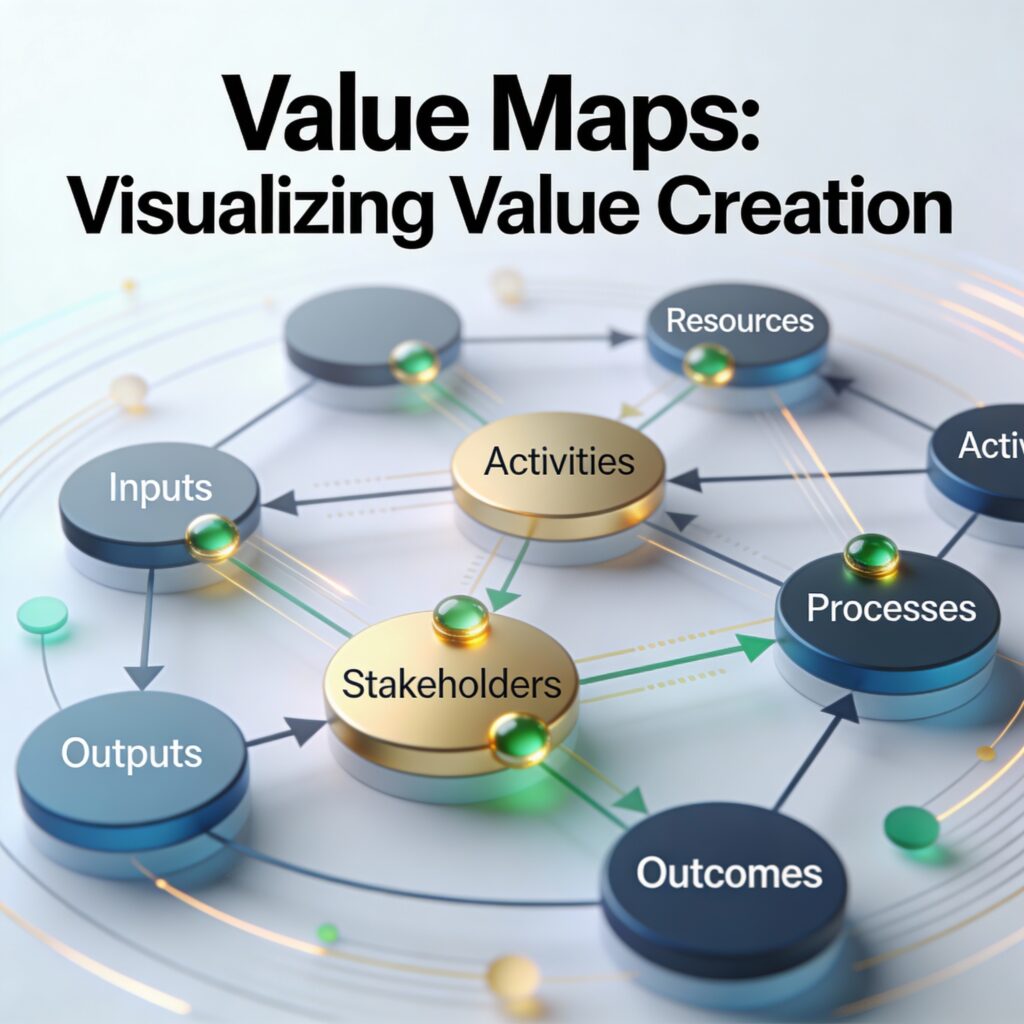
Value maps serve as a visual representation of the relationships between various elements that contribute to an organization’s value creation process. They help us to understand how different components, such as resources, activities, and stakeholders, interact to generate value. By mapping out these relationships, we can gain insights into the dynamics of our organization and identify areas for improvement.
Value maps are not just static diagrams; they are dynamic tools that evolve as our understanding of value creation deepens and as our organizational context changes.
In essence, value maps allow us to visualize the flow of value within our organization. They can highlight the connections between inputs, processes, outputs, and outcomes, enabling us to see how each element contributes to our overall mission.
By employing value maps, we can better understand the complexities of our operations and make informed decisions that enhance our strategic direction. This understanding is crucial for aligning our initiatives with our overarching goals and ensuring that we are effectively leveraging our resources.
Key Takeaways
- Value maps help organizations understand the value they create and deliver to stakeholders.
- Value maps play a crucial role in ensuring that organizational strategies are aligned with the overall goals and objectives.
- Identifying key stakeholders in the value mapping process is essential for understanding their needs and expectations.
- Value maps can be used to prioritize change initiatives based on their potential impact on value creation.
- Aligning change initiatives with organizational goals and objectives is critical for driving successful strategic alignment.
The role of value maps in strategic alignment
Ensuring Everyone is on the Same Page
By clearly illustrating how various initiatives contribute to our goals, value maps help ensure that all team members are on the same page regarding our strategic direction. This alignment is essential for fostering collaboration and ensuring that resources are allocated effectively.
Facilitating Communication Across the Organization
Value maps facilitate communication across different levels of the organization. They serve as a common language that can bridge gaps between departments and teams, allowing us to discuss strategies and initiatives in a more coherent manner.
Cultivating a Culture of Accountability and Shared Purpose
When everyone understands how their work contributes to the larger picture, we can cultivate a culture of accountability and shared purpose. This collective understanding is vital for navigating the complexities of change and ensuring that our efforts are aligned with our strategic vision.
Identifying key stakeholders in the value mapping process

Identifying key stakeholders is a critical step in the value mapping process. Stakeholders are individuals or groups who have an interest in or are affected by our organization’s activities. By engaging these stakeholders early in the mapping process, we can gather diverse perspectives that enrich our understanding of value creation.
This collaborative approach not only enhances the accuracy of our value maps but also fosters buy-in from those who will be impacted by changes. Involving stakeholders also helps us to identify potential challenges and opportunities that may not be immediately apparent. Different stakeholders may have unique insights into how value is created or lost within the organization.
By actively seeking their input, we can create a more comprehensive value map that reflects the realities of our operations. This inclusivity not only strengthens our value mapping efforts but also builds trust and collaboration among team members, ultimately leading to more effective change initiatives.
Using value maps to prioritize change initiatives
Once we have developed our value maps, we can use them as a tool for prioritizing change initiatives. By analyzing the relationships depicted in the map, we can identify which areas of our organization have the greatest potential for improvement or require urgent attention. This prioritization process is essential for ensuring that we focus our resources on initiatives that will yield the highest return on investment.
Value maps also allow us to assess the potential impact of various change initiatives on value creation. By visualizing how different initiatives interact with one another and with existing processes, we can make informed decisions about where to direct our efforts. This strategic approach helps us avoid spreading ourselves too thin and ensures that we are making meaningful progress toward our organizational goals.
Aligning change initiatives with organizational goals and objectives
Aligning change initiatives with organizational goals and objectives is crucial for ensuring that our efforts contribute to long-term success. Value maps provide a clear framework for this alignment by illustrating how each initiative connects to our strategic objectives. By mapping out these relationships, we can ensure that every change initiative is purposeful and directly contributes to our overarching mission.
Furthermore, this alignment fosters a sense of ownership among team members. When individuals understand how their work aligns with organizational goals, they are more likely to be engaged and motivated. This sense of purpose can drive higher levels of performance and commitment, ultimately leading to more successful change initiatives.
By leveraging value maps in this way, we can create a culture of alignment and accountability that supports our strategic vision.
Leveraging value maps to communicate the rationale for change

Effective communication is essential when implementing change within an organization. Value maps serve as powerful tools for conveying the rationale behind change initiatives. By visually representing how changes will impact value creation, we can help stakeholders understand the reasons for change and the benefits it will bring.
This clarity is vital for gaining support and minimizing resistance. When we present value maps to stakeholders, we can illustrate not only the current state but also the desired future state. This visual representation allows us to articulate a compelling narrative about why change is necessary and how it aligns with our strategic objectives.
By engaging stakeholders in this way, we foster a sense of collaboration and shared purpose, making it easier to navigate the complexities of change.
Assessing the impact of change on value creation
Assessing the impact of change on value creation is a critical aspect of effective change management. Value maps provide a framework for evaluating how changes will affect various components of our organization’s operations. By analyzing these impacts, we can identify potential risks and opportunities associated with each initiative.
Through this assessment process, we can also measure progress toward our strategic objectives. Value maps allow us to track changes over time and evaluate whether our initiatives are delivering the expected results. This ongoing evaluation is essential for making data-driven decisions and ensuring that we remain aligned with our organizational goals.
Integrating value maps into the change management process
Integrating value maps into the change management process enhances our ability to navigate transitions effectively. By incorporating value mapping into each phase of change management—from planning to implementation—we can ensure that all aspects of our initiatives are aligned with our strategic objectives. This integration fosters a holistic approach to change that considers both operational and strategic dimensions.
Moreover, by using value maps throughout the change management process, we can facilitate ongoing communication with stakeholders. Regularly updating stakeholders on how changes align with value creation helps maintain engagement and support throughout the transition.
This proactive communication strategy is essential for minimizing resistance and fostering a culture of adaptability within our organization.
Measuring the success of change initiatives using value maps
Measuring the success of change initiatives is crucial for understanding their effectiveness and impact on value creation. Value maps provide a structured approach for evaluating outcomes against predefined metrics aligned with our strategic objectives. By establishing clear criteria for success based on our value maps, we can objectively assess whether initiatives have achieved their intended results.
Additionally, using value maps allows us to identify areas for further improvement or adjustment. If certain initiatives do not yield the expected outcomes, we can analyze the value map to pinpoint where misalignments may have occurred or where additional resources may be needed. This iterative process of measurement and adjustment ensures that we remain focused on continuous improvement and long-term success.
Addressing challenges in using value maps for strategic alignment
While value maps offer numerous benefits for strategic alignment, they are not without challenges. One common issue is ensuring that all stakeholders are adequately engaged in the mapping process. If key voices are missing or if there is a lack of consensus on how value is created, it can lead to incomplete or inaccurate maps that do not reflect reality.
Another challenge lies in keeping value maps updated as organizational contexts evolve. As we implement changes or as external factors shift, it is essential to revisit and revise our value maps accordingly. Failing to do so may result in misalignment between our strategies and operations, undermining the effectiveness of our initiatives.
Case studies and examples of successful strategic alignment using value maps
Numerous organizations have successfully leveraged value maps for strategic alignment, demonstrating their effectiveness as tools for driving change. For instance, a leading technology company utilized value mapping to realign its product development processes with customer needs. By engaging cross-functional teams in creating a comprehensive value map, they identified key areas for improvement that led to enhanced product offerings and increased customer satisfaction.
Another example comes from a healthcare organization that employed value maps to streamline its patient care processes. By mapping out the flow of care delivery and identifying bottlenecks, they were able to implement targeted changes that improved patient outcomes while reducing costs. These case studies illustrate how organizations can harness the power of value maps to achieve strategic alignment and drive meaningful change.
In conclusion, understanding and utilizing value maps is essential for organizations seeking to align their strategies with operational activities effectively. By engaging stakeholders, prioritizing initiatives, communicating rationale, assessing impacts, integrating into change management processes, measuring success, addressing challenges, and learning from case studies, we can enhance our ability to create lasting value in an ever-evolving landscape.
One related article to Using Value Maps to Align Change with Strategy is “Leading with Impact” which discusses the importance of effective leadership in driving successful change initiatives. This article highlights the key role that leaders play in guiding their teams through periods of transition and ensuring that change efforts are aligned with the overall strategic goals of the organization. To learn more about leading with impact, you can visit this link.
FAQs
What is a value map?
A value map is a visual representation of an organization’s strategic objectives and the value streams that support those objectives. It helps to align change initiatives with the overall strategy of the organization.
How can value maps be used to align change with strategy?
Value maps can be used to identify areas where change initiatives can have the most impact on the organization’s strategic objectives. By mapping out the value streams and understanding how they contribute to the overall strategy, organizations can ensure that their change efforts are aligned with their strategic goals.
What are the benefits of using value maps to align change with strategy?
Using value maps to align change with strategy can help organizations ensure that their resources are being used effectively to support their strategic objectives. It can also help to prioritize change initiatives and ensure that they are focused on areas that will have the most impact on the organization’s overall success.
How can organizations create value maps?
Creating value maps typically involves identifying the organization’s strategic objectives, mapping out the value streams that support those objectives, and analyzing how those value streams contribute to the overall strategy. This process may involve collaboration across different departments and levels of the organization.
Are there any tools or frameworks that can help with creating value maps?
There are various tools and frameworks available that can help organizations create value maps, such as value stream mapping, business process modeling, and strategy mapping. These tools can help organizations visualize their value streams and understand how they contribute to their strategic objectives.