Integrity and honesty form the bedrock of any successful relationship, whether personal or professional. When we commit to being truthful and transparent in our dealings, we cultivate trust and respect among our peers. This trust is not merely a byproduct; it is essential for fostering a collaborative environment where ideas can flourish. We understand that integrity goes beyond just telling the truth; it involves aligning our actions with our values and principles. When we act with integrity, we create a culture where others feel safe to express their thoughts and opinions without fear of judgment or retribution.
Moreover, honesty is not just about avoiding deceit; it also encompasses the courage to admit when we are wrong. In our journey, we have learned that acknowledging our mistakes is a sign of strength rather than weakness. It allows us to grow and learn from our experiences, ultimately leading to better decision-making in the future. By embracing integrity and honesty, we not only enhance our credibility but also inspire those around us to uphold the same standards. This collective commitment to truthfulness fosters an environment where ethical behavior is the norm, paving the way for long-term success.
In exploring the essential traits of a good leader, one can find valuable insights in the article titled “Examples of Effective Leadership” available at this link. The article delves into various characteristics that define successful leaders, such as emotional intelligence, decisiveness, and the ability to inspire others. By examining real-world examples, it highlights how these traits manifest in effective leadership practices, providing a practical framework for aspiring leaders to develop their own skills.
Effective Communication Skills
Effective communication skills are vital in every aspect of our lives. They enable us to convey our thoughts clearly and understand others’ perspectives, creating a foundation for meaningful interactions. We recognize that communication is not just about speaking; it also involves active listening. By genuinely engaging with others, we can foster deeper connections and ensure that our messages are received as intended. This two-way street of communication allows us to build rapport and trust, which are essential for collaboration and teamwork.
In addition to verbal communication, non-verbal cues play a significant role in how we express ourselves. Our body language, facial expressions, and tone of voice can significantly impact the message we convey. We have learned to be mindful of these elements, ensuring that they align with our spoken words. By mastering both verbal and non-verbal communication, we can effectively articulate our ideas while also being receptive to feedback. This holistic approach not only enhances our interpersonal relationships but also empowers us to navigate complex situations with confidence and clarity.
Confidence and Decisiveness
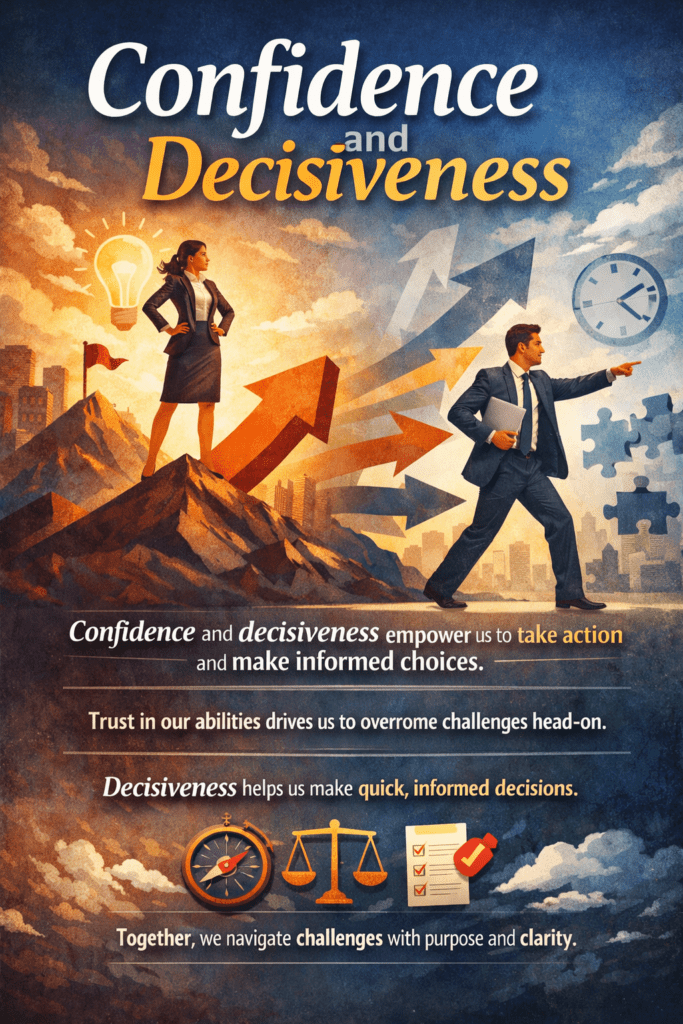
Confidence and decisiveness are crucial traits that empower us to take action and make informed choices. When we approach challenges with self-assurance, we inspire those around us to do the same. We have come to understand that confidence is not about being infallible; rather, it is about trusting our abilities and judgment. This belief in ourselves allows us to tackle obstacles head-on, knowing that we have the skills and resources necessary to overcome them.
Decisiveness complements our confidence by enabling us to make timely decisions, even in uncertain situations. We recognize that hesitation can lead to missed opportunities, so we strive to gather relevant information quickly and weigh our options carefully before taking action. By cultivating a decisive mindset, we can navigate complexities with agility and purpose. This combination of confidence and decisiveness not only propels us forward but also encourages others to embrace their own capabilities, fostering a culture of proactive problem-solving.
Empathy and Emotional Intelligence

Empathy and emotional intelligence are essential components of effective leadership and collaboration. We have learned that understanding the emotions of others allows us to connect on a deeper level, fostering an environment of support and compassion. By putting ourselves in someone else’s shoes, we can better appreciate their perspectives and experiences, which enhances our ability to communicate effectively and resolve conflicts.
Emotional intelligence goes beyond empathy; it also involves recognizing and managing our own emotions. We strive to be aware of how our feelings influence our behavior and decision-making processes. By cultivating emotional intelligence, we can respond thoughtfully rather than react impulsively, leading to more constructive interactions. This self-awareness enables us to create a positive atmosphere where everyone feels valued and understood, ultimately enhancing team dynamics and productivity.
Effective leadership is often characterized by a combination of essential traits that inspire and motivate teams. A good leader demonstrates strong communication skills, emotional intelligence, and the ability to adapt to changing circumstances. For those interested in exploring more about the impact of organizational culture on leadership effectiveness, you can read a related article that delves deeper into this topic. Understanding these dynamics can significantly enhance a leader’s ability to foster a positive work environment. Check out the article on organizational culture for further insights.
Adaptability and Resilience
| Trait | Description | Importance Level | Example Behavior |
|---|---|---|---|
| Communication | Ability to clearly convey ideas and listen actively. | High | Regularly holds team meetings and provides constructive feedback. |
| Integrity | Adherence to moral and ethical principles. | High | Consistently acts honestly and transparently. |
| Empathy | Understanding and sharing the feelings of others. | Medium | Supports team members during personal or professional challenges. |
| Decisiveness | Ability to make timely and effective decisions. | High | Evaluates options quickly and commits to a course of action. |
| Vision | Having a clear and strategic long-term goal. | High | Sets clear objectives and inspires the team towards them. |
| Adaptability | Ability to adjust to changing circumstances. | Medium | Embraces new ideas and modifies plans as needed. |
| Confidence | Belief in one’s abilities and decisions. | Medium | Leads meetings assertively and motivates others. |
| Accountability | Takes responsibility for actions and outcomes. | High | Owns mistakes and works to correct them. |
In an ever-changing world, adaptability and resilience are indispensable qualities that we must cultivate. We recognize that change is inevitable, whether in our personal lives or within the workplace. By embracing adaptability, we can navigate transitions with grace and flexibility, allowing us to seize new opportunities as they arise. This willingness to adjust our strategies and approaches enables us to remain relevant in a fast-paced environment.
Resilience complements our adaptability by equipping us with the mental fortitude to bounce back from setbacks. We understand that failure is often a stepping stone toward success, and by viewing challenges as learning experiences, we can maintain a positive outlook even in difficult times. This resilience not only strengthens our character but also inspires those around us to persevere through adversity. Together, we can foster a culture of growth and innovation where challenges are met with determination rather than fear.
Vision and Strategic Thinking
Vision and strategic thinking are essential for guiding our actions toward long-term goals. We have learned that having a clear vision provides direction and purpose, allowing us to align our efforts with a common objective. By articulating this vision effectively, we can inspire others to share in our aspirations and work collaboratively toward achieving them.
Strategic thinking involves analyzing complex situations and identifying the best course of action to realize our vision. We strive to consider various perspectives and potential outcomes before making decisions, ensuring that we are well-informed and prepared for any challenges that may arise. This proactive approach enables us to anticipate changes in the landscape and adapt our strategies accordingly. By combining vision with strategic thinking, we can create a roadmap for success that empowers everyone involved to contribute meaningfully.
Accountability and Responsibility
Accountability and responsibility are fundamental principles that guide our actions and decisions. We understand that taking ownership of our tasks fosters trust within our teams and organizations. When we hold ourselves accountable for our commitments, we demonstrate reliability and integrity, which encourages others to do the same. This culture of accountability creates an environment where everyone feels empowered to take initiative and contribute their best efforts.
Moreover, embracing responsibility means acknowledging the impact of our actions on others and the broader community. We strive to make decisions that reflect our values and consider the consequences they may have on those around us. By fostering a sense of responsibility within ourselves and encouraging it in others, we can create a positive ripple effect that extends beyond individual actions. Together, we can build a culture where accountability is celebrated, leading to greater collaboration and shared success.
Empowerment and Delegation
Empowerment and delegation are vital components of effective leadership that enable us to harness the strengths of our team members. We recognize that empowering others involves trusting them with responsibilities and providing them with the autonomy to make decisions within their areas of expertise. By doing so, we not only enhance their confidence but also foster a sense of ownership over their work.
Delegation is an essential skill that allows us to distribute tasks effectively while maximizing productivity. We have learned that successful delegation requires clear communication of expectations and providing the necessary resources for individuals to succeed. By empowering team members through delegation, we create an environment where everyone feels valued for their contributions. This collaborative approach not only enhances team dynamics but also drives innovation as diverse perspectives come together to solve problems.
Courage and Risk-taking
Courage and risk-taking are integral aspects of personal growth and organizational success. We understand that stepping outside our comfort zones often leads to new opportunities for learning and development. Embracing courage means facing challenges head-on, even when uncertainty looms large. By taking calculated risks, we open ourselves up to possibilities that may have otherwise remained unexplored.
Moreover, fostering a culture of courage encourages others to share their ideas without fear of failure or judgment. We believe that innovation thrives in an environment where individuals feel empowered to take risks and experiment with new approaches. By celebrating both successes and failures as valuable learning experiences, we create a safe space for creativity to flourish. Together, we can cultivate a mindset that embraces courage as a catalyst for growth.
Passion and Inspiration
Passion is the driving force behind our pursuits, igniting enthusiasm for what we do. When we approach our work with passion, it becomes contagious; others are inspired by our energy and commitment. We have learned that aligning our passions with our goals not only enhances our motivation but also fuels creativity and innovation within teams.
Inspiration plays a crucial role in leadership as well. By sharing our vision passionately, we can motivate others to join us on our journey toward achieving common objectives. We strive to be sources of inspiration for those around us by demonstrating dedication, resilience, and a genuine belief in the potential for positive change. Together, we can create an environment where passion thrives, leading to greater engagement and fulfillment in both individual pursuits and collective endeavors.
Humility and Open-mindedness
Humility and open-mindedness are essential qualities that foster collaboration and growth within teams. We recognize that no one has all the answers; therefore, approaching situations with humility allows us to remain receptive to new ideas and perspectives. By valuing the contributions of others, we create an inclusive environment where diverse viewpoints are welcomed.
Open-mindedness encourages us to challenge our assumptions and consider alternative solutions. We understand that embracing different perspectives can lead to more innovative outcomes than relying solely on our own experiences or beliefs. By cultivating humility alongside open-mindedness, we create a culture of continuous learning where everyone feels empowered to share their insights freely. Together, we can navigate complexities with greater agility while fostering an atmosphere of respect and collaboration.
In conclusion, as we reflect on these essential qualities—integrity, effective communication skills, confidence, empathy, adaptability, vision, accountability, empowerment, courage, passion, humility—we recognize their interconnectedness in shaping who we are as individuals and as a collective force for positive change. By embodying these traits in our daily lives, we not only enhance our personal growth but also contribute meaningfully to the success of those around us.
FAQs
What are the key traits of a good leader?
Key traits of a good leader include effective communication, integrity, empathy, decisiveness, confidence, accountability, and the ability to inspire and motivate others.
Why is communication important for a good leader?
Communication is crucial because it ensures that the leader can clearly convey goals, expectations, and feedback, fostering understanding and collaboration within the team.
How does empathy contribute to leadership?
Empathy allows leaders to understand and relate to the feelings and perspectives of their team members, which helps build trust, improve morale, and resolve conflicts effectively.
Can a good leader be decisive?
Yes, decisiveness is an important trait as it enables leaders to make timely and well-informed decisions, which is essential for guiding teams and organizations toward their objectives.
What role does integrity play in leadership?
Integrity involves being honest and ethical, which helps leaders earn respect and trust from their team, creating a positive and transparent work environment.
Is confidence necessary for effective leadership?
Confidence is necessary because it helps leaders inspire trust and assurance in their team, encouraging others to follow their vision and direction.
How does accountability affect leadership?
Accountability means taking responsibility for one’s actions and decisions, which sets a positive example and promotes a culture of responsibility within the team.
Can leadership skills be developed over time?
Yes, leadership skills can be developed through experience, education, self-reflection, and feedback, allowing individuals to improve their effectiveness as leaders.